
Lake County Multi-Day Arrest Log
Lake County has no live page that spans seventy-two hours or a full week of arrests. The LCSO site simply does not offer one. Its Lake County inmate search answers a different question, since it checks current custody by name rather than past bookings. For a true multi-day arrest log, file a date-range request with the sheriff's public records unit. History shows the format has existed. TomL Publishing hosted booking-log PDFs covering February 13–14, 2025 and January 22–23, 2024, and Village Spectator has pointed readers to those back issues. Treat them as newspaper copies. They prove nothing about schedule or coverage.
Request Lake County Arrest Dates
A formal records request is the fullest official method past a single report cycle. Spell out the dates. Staff need enough detail to pull the right arrests without guessing. Do you only need the newest report? The Lake County 24 Hour Arrests page covers the official prior-day channel.
- Define the start and end dates, including the year.
- Ask for Lake County booking or commitment-and-release records.
- Add a name, arresting agency, or booking number when seeking one person.
- Ask whether photographs are separate records if an image is required.
- Send the request to publicrecords@lcso.org or call 352-343-9582 or 352-343-9524.
- Use the Clerk's ShowCase system afterward for the case disposition.
The records custodian sits in the Historic Courthouse Building. The address is 350 W Main Street, 2nd Floor Lobby, Tavares, FL 32778. Walk-in requests work there. LCSO Records scans incident reports into its document system permanently. That permanence is about reports, though. It does not promise every booking photo or temporary roster item stays online.
Lake County Arrest Entry Fields
Old log examples help decode an entry. Archived Lake County reports show what each booking field means, and why the log is a starting record rather than the full case.
| Log field | Meaning |
|---|---|
| Inmate number | The jail identifier for the person or custody event. |
| Name and birth date | Identity fields that should be compared before accepting a match. |
| Booking date/time | The intake time, which may differ from the arrest time. |
| Arresting agency | LCSO, city police, FHP, or another agency that delivered the person. |
| Charge code and description | The charge at booking, subject to later change in court. |
| Sentence or bond status | A status field that can change and is not a finding of guilt. |
| OBTS and reference numbers | Keys that can connect jail, agency, and court files. |
Archived reports can list addresses or demographic details too. Those fields run ragged. Entries may be incomplete or mistyped, and a booking photograph is a separate image record the current LCSO roster does not promise for every result.
Lake Arrest Logs After Weekends
LCSO posts no fixed timetable for weekend or holiday multi-day reports. Nothing promises one. Routine media requests are reviewed the following business day, per LCSO media information, with a public information officer on call for breaking situations. That practice is not a jail-feed schedule. A Saturday arrest may reach the jail roster after intake or surface in a later prior-day report. Released fast? Then a date-range request may be the only route. Widen the search dates. Booking can lag the arrest itself. The county-wide Lake County recent-arrests hub maps the named-person path across custody, records, and court sources.
Lake County News Arrest Blotters
News outlets in Lake County cover arrests selectively rather than listing every booking. Villages-News Crime reports on arrests, citations, and police releases from The Villages, Lady Lake, Fruitland Park, Oxford, and nearby communities. Leesburg-News runs blotter-style police items for Leesburg and its surroundings. The Clermont Sun handles South Lake. None serves as a full jail roster of Lake County recent arrests.
Want to see how a blotter looks? The Villages-News crime page illustrates the selected-story model.
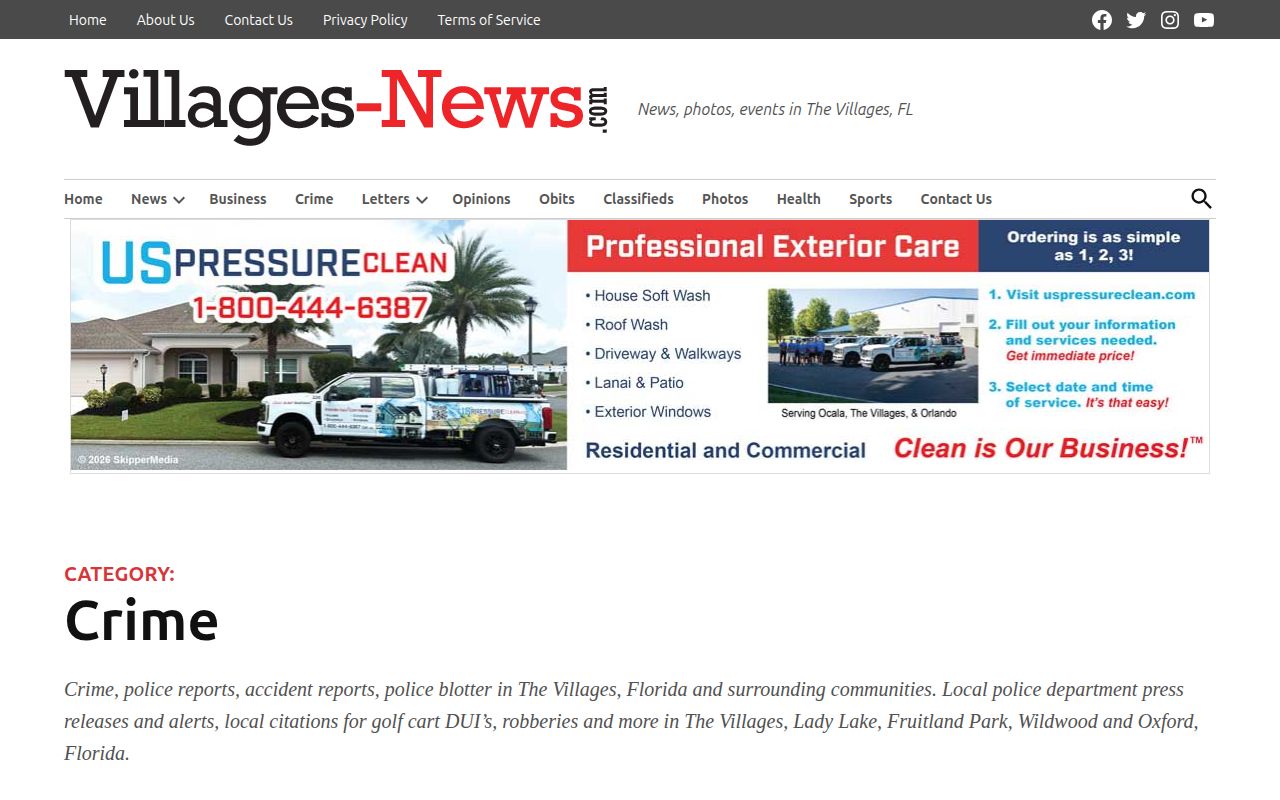
A story's date and the named agency are your keys to the matching official record. Start there. Daily Commercial and Village Spectator can also point toward past reports. Photos often come straight from police. Even so, the piece remains a publisher's account. Confirm custody with LCSO and follow the docket through the Clerk instead of reading a headline as a full case history.
Lake Arrest Archives and Retention
Online display and legal retention are two different things. The live roster drops people after release or transfer. A newspaper PDF may linger in an archive. The record can still sit at LCSO while neither web view shows it. Florida's older GS2-SL schedule describes booking records and commitment-and-release lists kept at least one anniversary year after release. Newer schedule materials exist. Verify the controlling item with the records custodian. Retention is context, not a promise of online access. The Clerk's ShowCase court search carries later public case events and disposition data. Sealed or expunged cases never appear there. Older files may need a clerk request. Start with the official disposition, then ask LCSO Records for the booking record and whether an image is still retained.
A temporary online log stops reaching the dates you need at some point. That is when this bureau becomes the main route. Older arrest records live there. A sealed case at the Clerk can restrict public access. Publisher copies may lag that change. Ask the originating office to fix any factual error in its own record. For archive searches, keep a simple source trail. Note the report date, booking number, agency, and the date each page was checked. An old snapshot then never masquerades as a current government record.
Confirm Lake County Blotter Leads
Start with the official record. Then widen outward. Request the date span from LCSO first. ShowCase then links a booking number, sheriff number, arrest date, citation, or case number to the court docket. Newspaper archives add reporting context last. Commercial county pages sometimes preserve copied entries. They are unofficial. They lag corrections, and they should never outrank the sheriff or clerk. Custody, release, and case outcome are three different facts. The live jail search answers the first while the person remains listed. A release list or booking sheet can document the second. The court docket supplies the third. Someone leaving the roster may have posted bond, finished processing, or transferred. Release for another reason is possible too. No single inference fits every disappearance.
Lake County city police records can also fill a gap. Clermont, Leesburg, and Tavares keep separate records-request routes. Each one covers agency reports, even when the person was booked into the county detention center. Ask the arresting department for its incident or arrest report. Ask LCSO for the jail booking record. The two files are related but come from different offices. Define your format for a broad date request too. See whether LCSO can provide a commitment-and-release list, individual booking sheets, or another export. Name the stated period in the request. A list is easier to scan, while a booking sheet holds more detail about one intake. Request photographs separately, since the public roster does not promise an image for every result. The records custodian can explain what exists and whether exempt information must be removed first.
Juvenile, sealed, expunged, and other exempt data may be withheld from public distribution. So a missing line in an archive is not proof that no law-enforcement event occurred. LCSO removes exempt information before releasing reports. The Clerk states that sealed and expunged cases are not viewable through its public portal. These limits protect records the law keeps closed, and stale publisher copies are no way around them. When dates span several agencies, request records from each creator. LCSO holds the county detention booking. A municipal police department may hold the incident narrative, citation, or arrest affidavit. The Clerk holds public court filings once a case opens. Match the arresting agency and reference number across those sources. That step keeps a newspaper item or old log row from being mistaken for the full official file.
Narrow the request if staff flags an unclear scope. Long ranges invite questions. A month, a named agency, or one record type beats asking for everything connected to arrests. Keep the response plus any invoice or correspondence with the returned files. That trail shows which office supplied the data. It also shows when. That matters if an online roster or secondary PDF changes later.